PreK & Kindergarten Number Recognition Made Fun: Dab-a-Dot Worksheets for Early Math Success
Helping young children recognize, name, and confidently identify numbers is one of the most foundational skills in early childhood education. Whether you're a preschool teacher preparing for back-to-school assessments, a kindergarten educator reinforcing number sense, or a parent supporting learning at home, Dab-a-Dot Number Worksheets offer an engaging, multisensory, and highly effective approach to building early numeracy.
What Is a Dab-a-Dot Number Worksheet?
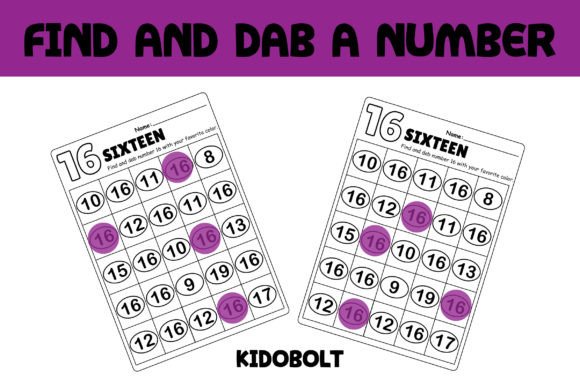
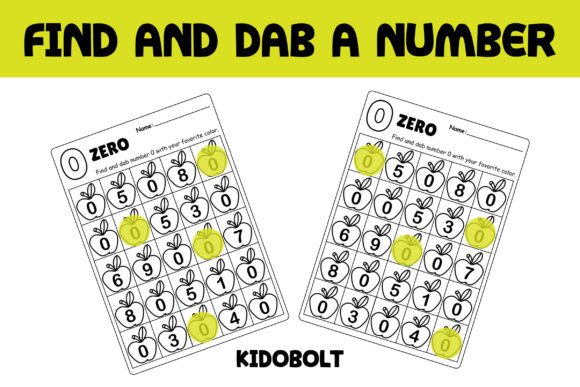
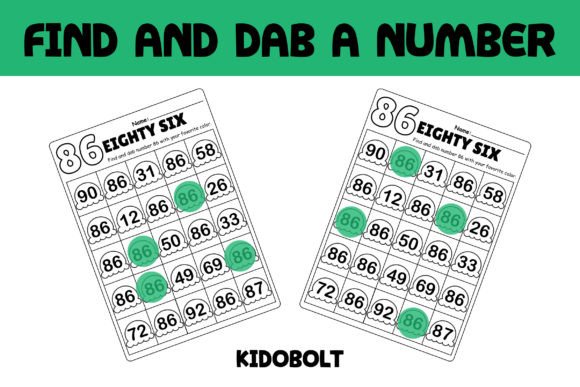
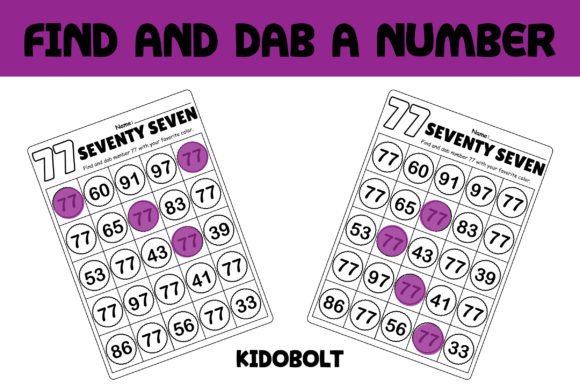
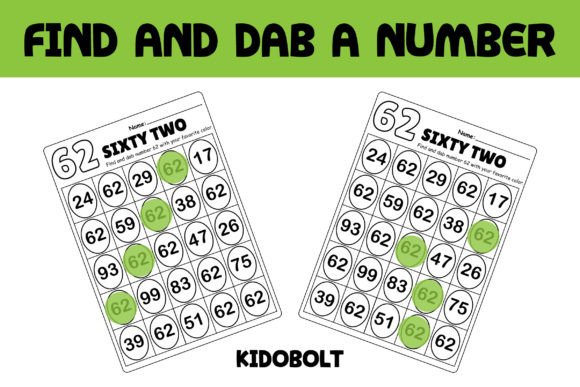
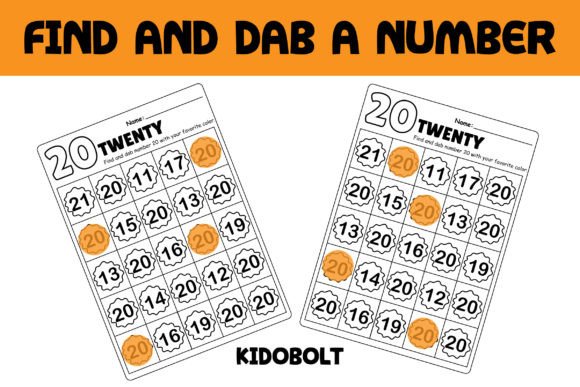
A Dab-a-Dot Number Worksheet is a printable activity sheet designed specifically for PreK and kindergarten learners that features large, clear numerals (often 0–20) surrounded by dots, circles, or outlines waiting to be “dabbed.” Each worksheet focuses on one target number—such as the popular PreK Dab a Dot Number Worksheet – 20—and invites children to locate and mark all instances of that numeral using a dabber, stamp, sticker, or alternative manipulative.
These worksheets are delivered as high-resolution JPG files at 300 DPI, ensuring crisp, professional-quality printing for classroom use or home practice. The clean, uncluttered design minimizes visual distractions while maximizing focus on number form and recognition.
Why Dab-a-Dot Activities Work So Well for Early Learners
Children aren’t just learning to *see* numbers—they’re learning to know them. Dab-a-Dot activities support this deep learning through three key developmental pathways:
- Sensory-Motor Integration: Pressing a dabber, placing a pompom, or peeling a sticker strengthens fine motor control, hand-eye coordination, and finger dexterity—skills essential for writing numbers later on.
- Visual Discrimination: Kids must scan the page, distinguish between similar-looking numerals (e.g., 6 vs. 9, 12 vs. 21), and isolate the target digit among others—a subtle but powerful cognitive workout.
- Repetition with Joy: Unlike traditional tracing or rote flashcards, dabbing feels like play. That intrinsic motivation increases engagement, time-on-task, and retention—especially for children who struggle with number recall or attention.
Research in early childhood development consistently shows that combining movement, choice, and positive reinforcement significantly boosts learning outcomes. Dab-a-Dot turns abstract symbols into tactile, memorable experiences.
How to Use These Worksheets Effectively
Flexibility is one of the greatest strengths of Dab-a-Dot number practice. Here’s how educators and caregivers can maximize its impact:
Classroom Applications
- Back-to-School Assessment Tool: At the start of the year, use the Kindergarten Number Dab a Dot Printable Worksheet series to quickly gauge incoming students’ number identification skills—no formal testing required. Observe which numbers cause hesitation or confusion to inform small-group instruction.
- Math Centers & Stations: Rotate dabbing activities weekly as part of your literacy or math center rotation. Pair with number songs, ten-frame cards, or counting collections for layered learning.
- “Number of the Day” Routine: Integrate a new worksheet each morning during calendar time. Ask questions like, “How many 7s did you find?” or “Which number looks most like a backwards ‘L’?” to spark mathematical conversation.
Home Learning Ideas
- Use washable paint dabbers or bingo markers for easy cleanup.
- Try alternatives like decorative stamps, dry-erase markers (on laminated sheets), pompoms, buttons, or stickers—each adds novelty and reinforces different fine motor patterns.
- Turn it into a family game: “Find five 14s before Daddy finishes his coffee!”
Who Benefits Most from Dab-a-Dot Number Practice?
While these worksheets are ideal for typical PreK and kindergarten learners, they’re especially valuable for children who:
- Experience difficulty distinguishing numerals (e.g., reversing 3/8 or confusing 5/2).
- Need repeated, low-pressure exposure to build automaticity.
- Learn best through movement, touch, or visual cues rather than auditory instruction alone.
- Are English language learners building number vocabulary across languages.
- Have sensory processing preferences—many children find the rhythmic pressure of dabbing calming and regulating.
Importantly, Dab-a-Dot isn’t “just for beginners.” Advanced learners can extend the activity by counting total dabs, writing the numeral in a different font, or matching it to a quantity on a ten frame.
Common Misconceptions—Clarified
Misconception #1: “Dabbing is just busy work.”
Reality: When intentionally scaffolded, dabbing activates working memory, visual scanning, and executive function—not just motor skills. It’s structured play with measurable cognitive goals.
Misconception #2: “Once kids can count, they know their numbers.”
Reality: Counting aloud ≠ recognizing numerals out of sequence. A child may fluently count to 20 but not identify “17” on sight. Dab-a-Dot isolates symbol recognition—the critical bridge between oral counting and written math.
Misconception #3: “Digital apps are better for learning numbers.”
Reality: While tablets have value, research shows young children learn foundational concepts more deeply through hands-on, screen-free interaction. Physical manipulation builds neural pathways that screens cannot replicate.
Supporting Broader Developmental Goals
Beyond number recognition, consistent use of Dab-a-Dot worksheets supports:
- Attention & Focus: Following multi-step directions (“Find all the 13s and dab them red”) builds listening stamina.
- Confidence & Agency: Children choose colors, tools, and pace—fostering ownership over learning.
- Early Writing Readiness: Repeated exposure to numeral shapes improves formation accuracy when children begin writing independently.
- Classroom Community: Sharing completed worksheets—and even posting photos of projects—builds pride, peer inspiration, and collaborative learning culture.
Make It Your Own: Creative Extensions
Don’t stop at dabbing! Try these simple upgrades to deepen learning:
- Color-Coded Quantity Match: Dab each numeral in the color that matches its value (e.g., dab all 4s in blue, then glue four blue buttons beside it).
- Number Line Hunt: Print a 0–20 number line and ask kids to dab each number on the worksheet, then point to its place on the line.
- Story Starters: After completing a “15” worksheet, ask, “What could 15 things be? A basket of apples? Fifteen stars in the sky?” Encourage drawing or dictating a short story.
Share Your Dab-a-Dot Creations!
We love seeing how educators and families bring learning to life. Did you make something using this product? Snap a photo of your child’s finished worksheet—or your classroom display of student work—and share your project. Your post will appear both here and on your social feed, inspiring other teachers, parents, and caregivers with real-world ideas and joyful learning moments.
Remember: Every dab is more than a dot—it’s a step toward confidence, competence, and curiosity in mathematics. With thoughtful implementation, the humble PreK Dab a Dot Number Worksheet – 20 and its kindergarten counterparts become powerful tools—not just for identifying numbers, but for nurturing capable, joyful, lifelong learners.