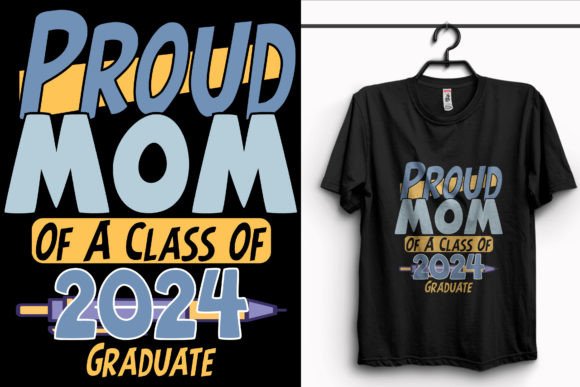
Proud Mom School T-Shirt Design
For educators, small business owners, and print-on-demand creators launching back-to-school campaigns, the Proud Mom School T-Shirt Design is more than a visual—it’s a ready-to-deploy asset built for speed, consistency, and professional output. Designed specifically for kindergarten and early elementary contexts, it balances simplicity with emotional resonance: clean lines, friendly proportions, and a warm, inclusive tone that appeals to families while meeting commercial production standards.
This digital design package isn’t a single image—it’s a coordinated set of production-ready files engineered for flexibility across multiple workflows. You’ll receive one SVG, one AI file, one PNG, one PDF, one EPS, and three JPEGs—all generated from the same high-fidelity vector source. That means whether you’re prepping for screen printing, cutting vinyl on a Cricut or Silhouette machine, generating iron-on transfers, or exporting for embroidery digitizing, you’re working from identical geometry and spacing—no re-tracing, no guesswork, no quality loss at scale.
How It Fits Into Real Creative Workflows
In practice, the Proud Mom School T-Shirt Design functions as a plug-in component—not a standalone product, but a functional node in larger systems. For example:
- Print-on-demand sellers use the SVG or EPS to auto-generate mockups across platforms like Printful or Gooten, then batch-upload variants (e.g., light/dark shirt backgrounds) using the included color-change capability.
- Kindergarten teachers or PTA coordinators import the PDF into Canva or Google Slides to add school names, dates, or class numbers before sending to local printers—no design software required.
- Vinyl crafters open the AI file in Adobe Illustrator or the SVG in Inkscape to isolate individual vector shapes (there are exactly 100), adjust spacing for layered cuts, or assign different cut depths per element.
- Marketing teams repurpose the PNG or JPEG assets for email banners, social media ads, or printed invitations—knowing all outputs retain crisp edges even when scaled to 4500×5400 pixels at 300 DPI RGB.
The design’s technical specs—300 DPI resolution, RGB color space, and native vector scalability—aren’t arbitrary. They reflect deliberate alignment with industry-standard prepress requirements. Unlike raster-only downloads that blur when enlarged or distort when recolored, this package maintains fidelity through every stage: from initial proofing to final press run or heat-transfer application.
Preparation and Compatibility: What You Need to Know Before Use
Before importing the Proud Mom School T-Shirt Design into your workflow, verify two things: software compatibility and intended output method.
AI and EPS files require vector-editing tools (Adobe Illustrator, Affinity Designer, CorelDRAW) for full layer control and non-destructive color edits. SVG works natively in most web-based design tools and cutting software. PNG and JPEGs serve best for quick placement in presentation decks or social posts—but avoid editing these if you need to change colors or resize beyond original dimensions.
All files are structured with logical layer naming and grouped elements, making it easy to toggle visibility, lock/unlock components, or export subsets (e.g., just the text block for a matching tote bag design). The 100 vector shapes aren’t decorative flourishes—they’re discrete, editable units. That means swapping out “Mom” for “Dad,” “Guardian,” or “Teacher” takes seconds, not hours. It also means you can extract the icon alone for use on stickers or classroom signage without dragging along typography or background elements.
Implementation Tips for Consistent, Efficient Output
To maximize reuse and minimize revision cycles, follow these practical steps:
- Start with the AI or EPS file if you plan to modify colors, text, or layout. These preserve full vector integrity and allow precise Pantone matching for brand-aligned apparel.
- Use the SVG for web or cutting workflows—but check path direction and compound shape settings before sending to a vinyl cutter. Some machines interpret overlapping paths differently; the included EPS serves as a fallback if needed.
- Export new JPEGs or PNGs only after final edits, using “Save for Web” or “Export As” with sRGB profile embedded. Avoid saving over the originals—keep them as master files.
- When preparing for DTG or screen printing, confirm with your printer whether they prefer flattened RGB PDFs (included) or separated CMYK layers. The provided PDF is print-ready but can be converted without degradation thanks to its vector foundation.
Long-term usability hinges on organization. Store the master files in a clearly labeled folder with version notes (e.g., “ProudMom_Kindergarten_v2_ColorAdjusted”). If you create derivative versions—say, a bilingual variant with Spanish text—save those as new files rather than overwriting. This preserves backward compatibility and simplifies audits if you later need to revert or compare outputs.
Integration With Broader Business and Educational Systems
The Proud Mom School T-Shirt Design doesn’t exist in isolation. It connects directly to enrollment timelines, marketing calendars, and supply chain rhythms. For instance:
- A preschool owner ordering custom shirts for orientation week can download the files Monday, send proofs to parents Tuesday, approve final art Wednesday, and submit to their printer Thursday—leaving Friday open for pickup and distribution before the first day.
- A freelance designer building a POD store around educational themes uses this file as a template: duplicate the AI file, swap fonts and colors to match seasonal palettes (e.g., autumn oranges or spring pastels), and generate five new SKUs in under two hours.
- An education blogger creating a “Back-to-School Prep Kit” bundles the design with printable checklists and supply lists—offering tangible value while reinforcing their authority on early learning readiness.
That level of integration relies on the design’s inherent neutrality: it avoids dated trends, overly specific imagery (like cartoon apples or chalkboards), or culturally narrow references. Instead, it focuses on universal emotional cues—pride, care, belonging—that translate across regions, languages, and school models.
Quality Control and Long-Term Value
Because the design originates from a vector source and includes redundant formats, quality control becomes procedural rather than reactive. You don’t wait for a blurry mockup to flag an issue—you verify early: open the AI file, zoom to 800%, inspect anchor points on curves, test color swaps using global swatches, and export a test cut file to your machine before committing to bulk production.
Over time, the value compounds. Each new use case—whether adapting it for a teacher appreciation event, converting it to a reusable classroom poster, or licensing it to a local boutique—builds on the same foundational asset. There’s no need to renegotiate licensing terms or re-commission artwork. You own the files outright, with full commercial rights for physical and digital resale.
And because the resolution and format coverage anticipate real-world constraints—vinyl adhesion limits, fabric bleed on cotton tees, screen mesh counts—the design reduces trial-and-error. You’re not optimizing blindly. You’re executing from a known, tested baseline.
If you work with t-shirt designs regularly—whether sourcing, adapting, or selling—this kind of preparedness changes how you allocate time. Instead of troubleshooting pixelation or wrestling with ungrouped layers, you focus on messaging, audience fit, and fulfillment logistics. That shift—from technical friction to strategic execution—is where the Proud Mom School T-Shirt Design delivers measurable ROI.